


The Book of Ruth: Threads of Grace Woven Through a Refugee Story
We were studying the story of Ruth for our Monday devotions at the Women’s Center. Over multiple weeks, we walked through her journey together. I’ve spent a lot of time meditating on this book, and then recently, a friend of mine shared a devotion on it that added to those thoughts (so all the good stuff below is probably from him!).
First, the story. “A severe famine came upon the land. So a man from Bethlehem in Judah left his home and went to live in the country of Moab.” This is a refugee story. A disaster forces a family into other land. And what awaits them is even more pain. “Than Elimelech died…ten years later, Mahlon and Kilion died. This left Naomi alone, without her two sons or her husband.” Naomi’s story – because this book is just as much about her as it is about Ruth – begins in despair. Loss, displacement, life among a pagan society. By the end of this part of the story, she was left completely alone, or so she thought.
Yet God preserved a remnant, people who still chose to live with integrity, compassion and kindness, especially towards the vulnerable. Ruth was part of that remant. She chose to step up and care for Naomi. In fact, she went as far as reversing roles and choosing to become the outsider, the immigrant from a foreign land herself as she accompanied Naomi back to Israel. This particular part of the story generated great discussion. Who would go live with their mother-in-law if given the choice? For most of the women, it was unthinkable. Yet, as we dug deeper into what makes a good mother-in-law, there was a concensus that kindness and care and respect would change the dynamic.
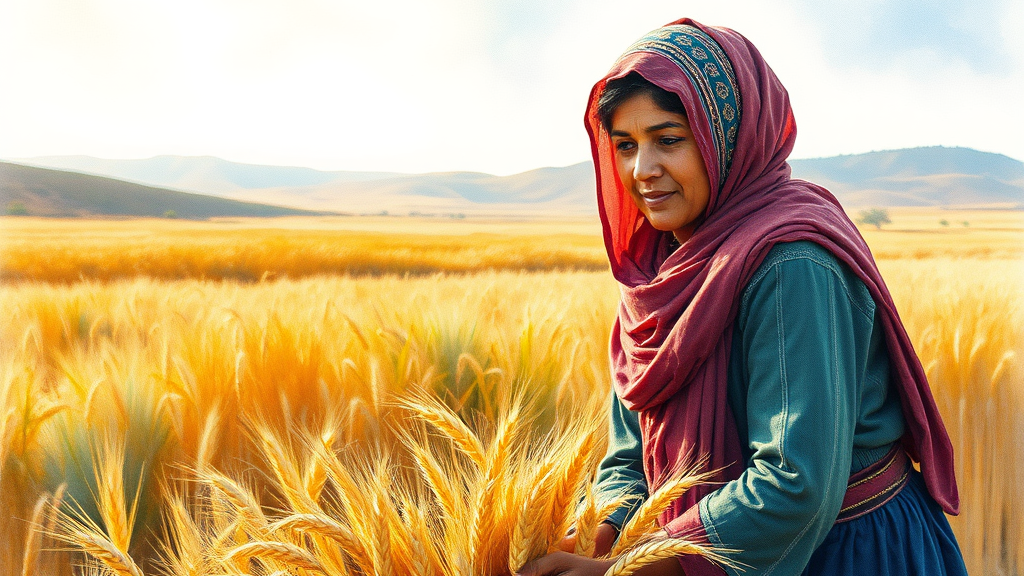
And then the story continued. Once in Israel, we see that Ruth and Naomi are living in poverty, in a precarious situation. Ruth has committed to making Naomi’s God her God, so maybe she understands the promises Yahweh has made to care for the foreigner and widow. Whatever the case, her hope was not misplaced as God led her to another one of His faithful remnant, a man named Boaz who chose to be obedient to the Torah fully, as he obeyed Leviticus 23:22’s admonition: “’When you reap the harvest of your land, do not reap to the very edges of your field or gather the gleanings of your harvest. Leave them for the poor and for the foreigner residing among you. I am the LORD your God.’” Again, this story has implications for the listeners in the room. Are we sharing our resources with open-handed generosity, heeding Christ’s call to welcome the stranger?
And then another question arises – how are we caring for widows? In most of the countries our students are from, the situation of widows is far more precarious than it is here. When women are banned from work, what does a single mother do? According to The New Security Beat, “While the exact figures remain uncertain, estimates suggest there are between 2 to 2.5 million war widows in Afghanistan. Many of them lost their husbands to decades of conflict, natural disasters, or disease. They now face a daily struggle for survival, remaining largely invisible to the world.” Boaz’s help for a widow AND a foreigner marks him as a man of special kindness.
Both Ruth and Boaz showed generosity that went above and beyond. And the implications of their actions reverberated through history in ways they couldn’t have foreseen. With a little prompting from Naomi, both Boaz and Ruth had the honor of becoming part of the line of the Messiah, and the hardships of so many years became a beautiful story of hope and joy, the faithful obedience impacting generations. As the women said to Naomi, not even realizing they were making a prophetic statement, “Praise the Lord who has provided a redeemer for your family.” Again, there were cultural cues that were more easily understood by our students, as they already know that marriages must be arranged through proper channels and that at the birth of the first grandson, the mother-in-law is the one who often raises her new grandchild. We discussed these cultural differences together, with Americans, Afghans and Syrians learning a bit more about the differences and similarties of our respective countries.
This story is powerful for our students in so many ways because it speaks to their lived reality in displacement, suffering, pain, mother-in-law/daughter-in-law relationships, and that God cares for women, for outsiders, and especially for widows, the lowest of the low in most of these societies. Before this year, I had never realized how much the book of Ruth speaks to the refugee experience. I appreciate in a new way this beautiful little book and all it teaches us about living as “lights that shine.”
“The object of our shining is not that men may see how good we are, nor even see us at all, but that they may see grace in us and God in us, and cry, ‘What a Father these people must have.’” – Charles Spurgeon